Babies
Helping a newborn's nervous system do its job.
Babies arrive with a nervous system still learning to run the whole show. Gentle, instrument-based care checks that the connection between a baby's spine and everything it controls, feeding, sleep, digestion, mood, is working the way it should.

Birth is a big job for a small body, even when labour goes smoothly and quickly. The earliest months bring their own physical demands too. Tummy time, rolling, sitting up, each one asks a newborn's spine and muscles to do something new before they are always fully ready for it. Most of the families who come to see us are not chasing a diagnosis. They are chasing an explanation for something that does not quite add up: a baby who cries more than seems reasonable, or feeds well on one side and fights the other, or holds their head tilted the same way no matter how you turn them.
What brings families in
Reasons parents most often ask for a first visit
None of these require a diagnosis before you call.
- Colic
- Excessive crying
- Fussiness and gassiness
- Reflux issues
- Nursing or feeding problems
- Stiffness, or a baby who is hard to handle
- Flat head (plagiocephaly)
How we adjust
Why gentleness is not optional here
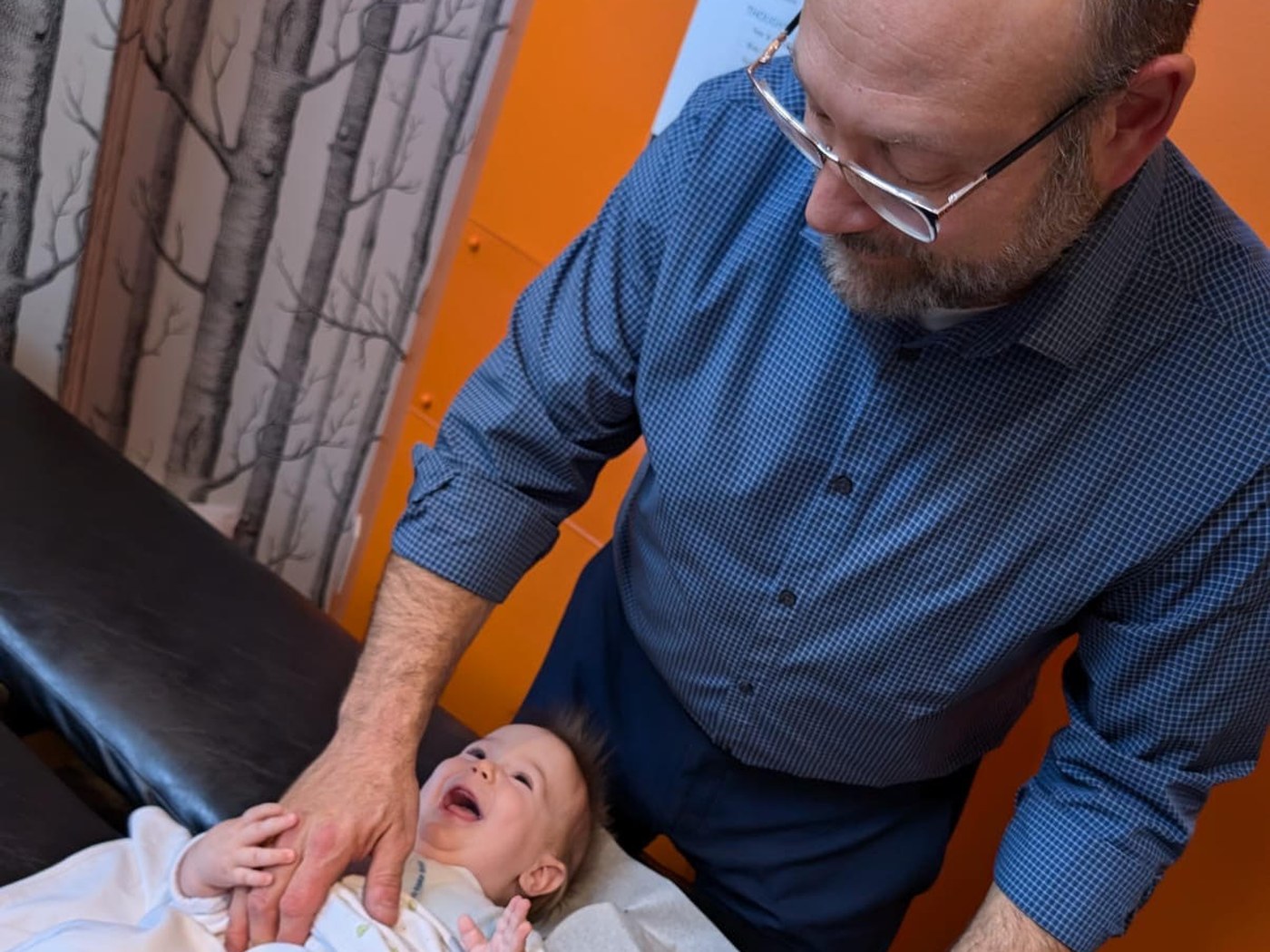
The main technique used in this office is Torque Release Technique, delivered with a handheld instrument called the Integrator. It delivers a light, specific, repeatable impulse to one segment of the spine at a time. There is no twisting, no cracking and no popping, at any age, which matters even more when the patient weighs twelve pounds. The same light, specific impulse is used across every age we see in this office, from newborns to seniors managing osteoporosis or spinal fusions, so a baby's first visit is, if anything, the easiest use of it in the building.
A typical first visit
Dr. Weitz checks your baby's spine and nervous system directly, the same way he would check any patient, just adjusted in scale and pressure. Every visit starts with listening, to you first, then to your baby, before any hands-on care begins. If something does not look like it belongs in this office, you will hear that plainly on day one rather than being handed a package to sign.
Good fit signs
- Your baby cries more than feels normal to you, and nothing you have tried has settled it.
- Feeding or latch has been a struggle on one side more than the other.
- You want a second, gentle opinion, not a diagnosis you have to go chase down elsewhere.
- The idea of a baby's neck being cracked or twisted is a hard no for you, full stop.
And if this office is not the right fit for what is going on, Dr. Weitz will tell you that directly rather than start a plan anyway.
Most parents just want someone to look, and tell them the truth.
Book a first visit for your baby.
Set up a visit